

PBA 23: Nanoencapsulation of Thymol Mitigates its Toxicity in Cells and Zebrafish Embryos
| Author | Fathima, Aseela |
| Author | Yammine, Jina |
| Author | Gharsallaoui, Adem |
| Author | Karam, Layal |
| Author | Shaito, Abdullah A. |
| Available date | 2025-11-25T04:40:45Z |
| Publication Date | 2025 |
| Publication Name | International Conference on Advanced and Sustainable Materials (ICASM 2025) |
| Identifier | http://dx.doi.org/10.13140/RG.2.2.27282.11201 |
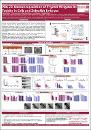
| Abstract | Thymol, a monoterpenoid and a major boactive constituent of essential oils (EOs) derived from the plants of Lamiacea species such as Thyme, has garnered wider research interest for its diverse pharmaceutical, food, and environmental applications. However, thymol in its free form poses significant application challenges due to unfavorable physiochemical properties, including high volatility, poor aqueous solubility, and pronounced lipophilicity. Thymol encapsulation has the potential to overcome these limitations, improving thymol’s stability, solubility and release. Research gap: Despite its advantages, toxicity and biocompatibility of encapsulated thymol have not been comprehensively characterized. Objective: To evaluate the cytotoxic effects of free and nanoencapsulated thymol on normal and cancerous human cells (in vitro), as well as to investigate acute and organ-specific toxicity in vivo in zebrafish (Danio rerio) embryos. |
| Language | en |
| Publisher | College of Education, Qatar University |
| Subject | Thymol Monoterpenoid Nanoencapsulation Cytotoxicity Zebrafish embryos |
| Type | Conference |
Files in this item
This item appears in the following Collection(s)
-
Biomedical Research Center Research [875 items ]
-
Biomedical Sciences [881 items ]
-
Human Nutrition [469 items ]